

Countdown to Upper Elementary State Testing: Why You Should Start Your Test Prep Now
Hello my Teacher Friends!
As a teacher, you know that preparing students for state testing can be a daunting task. State testing does not have to be a dirty word though, even so, the majority of us will still feel the pressure to ensure our students perform well. This is why it’s essential to start your test prep early.
Keep reading to explore why early preparation is crucial and let’s talk about quick and effective strategies to streamline your test prep process.
Understanding the Stakes
- Important note: In the forefront of our minds, we need to hold above all else, that our students are more than a test score. Yes, the state puts a lot of emphasis on testing, and though we want our “babies” to perform well, at the end of the day I’ve never had to list my 3rd grade test scores on a resume. I think this is an easy mindset for all of us, but let’s remember, teacher, YOU are also more than a test score!
- State Inflicted Impact of Test Scores: The promoters say that they’re designed to reflect student performance. Where that may be true for some students, what test scores can do is affect school rankings, funding, and possibly your evaluations depending on your state/school requirements.
The Benefits of Early Preparation
- Reduced Stress and Anxiety: Starting test prep early helps alleviate stress and anxiety for both teachers and students, providing ample time for comprehensive review and practice.
- Targeted Remediation and Enrichment: Early preparation allows you to identify areas of weakness and provide targeted remediation while also offering opportunities for enrichment activities to challenge high-performing students.
Quick and Effective Test Prep Strategies
- Diagnostic Assessment: Begin with a diagnostic assessment to identify students’ strengths and weaknesses, guiding your instructional focus.
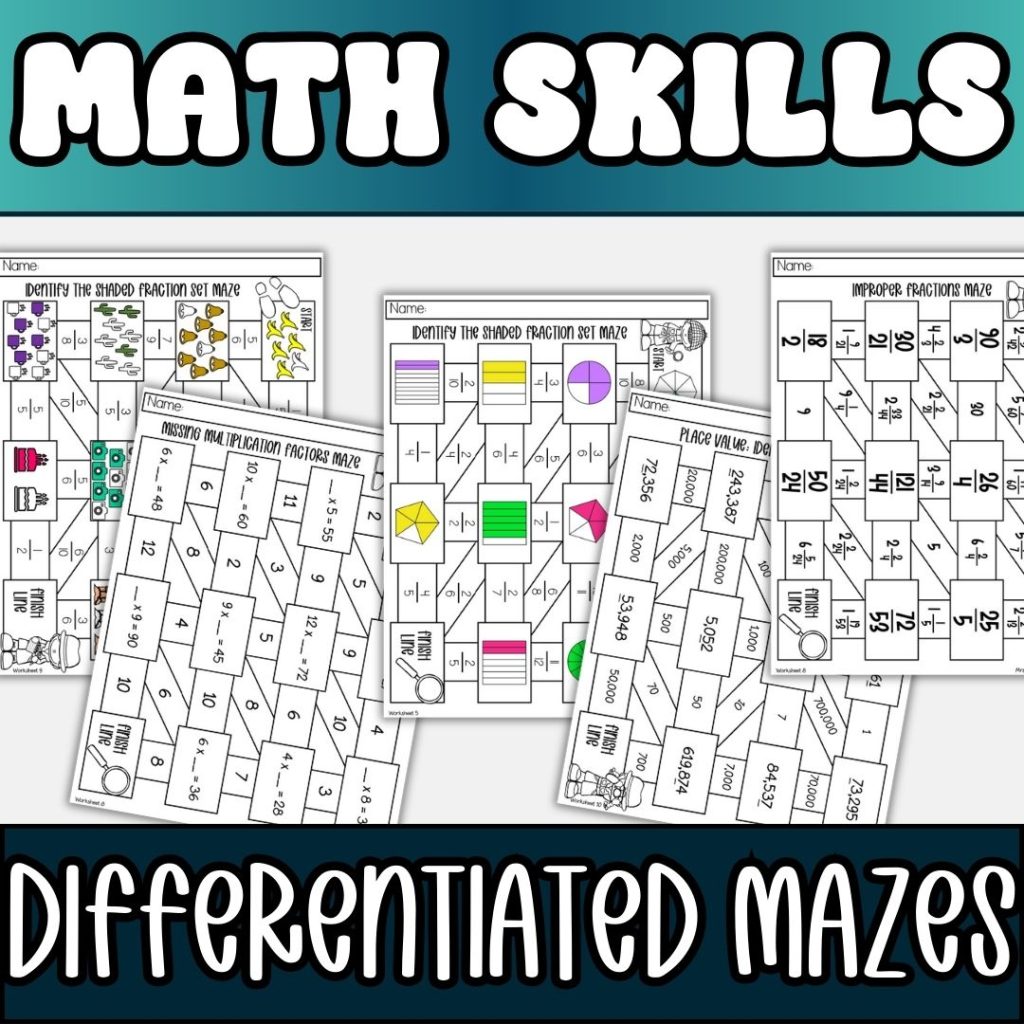
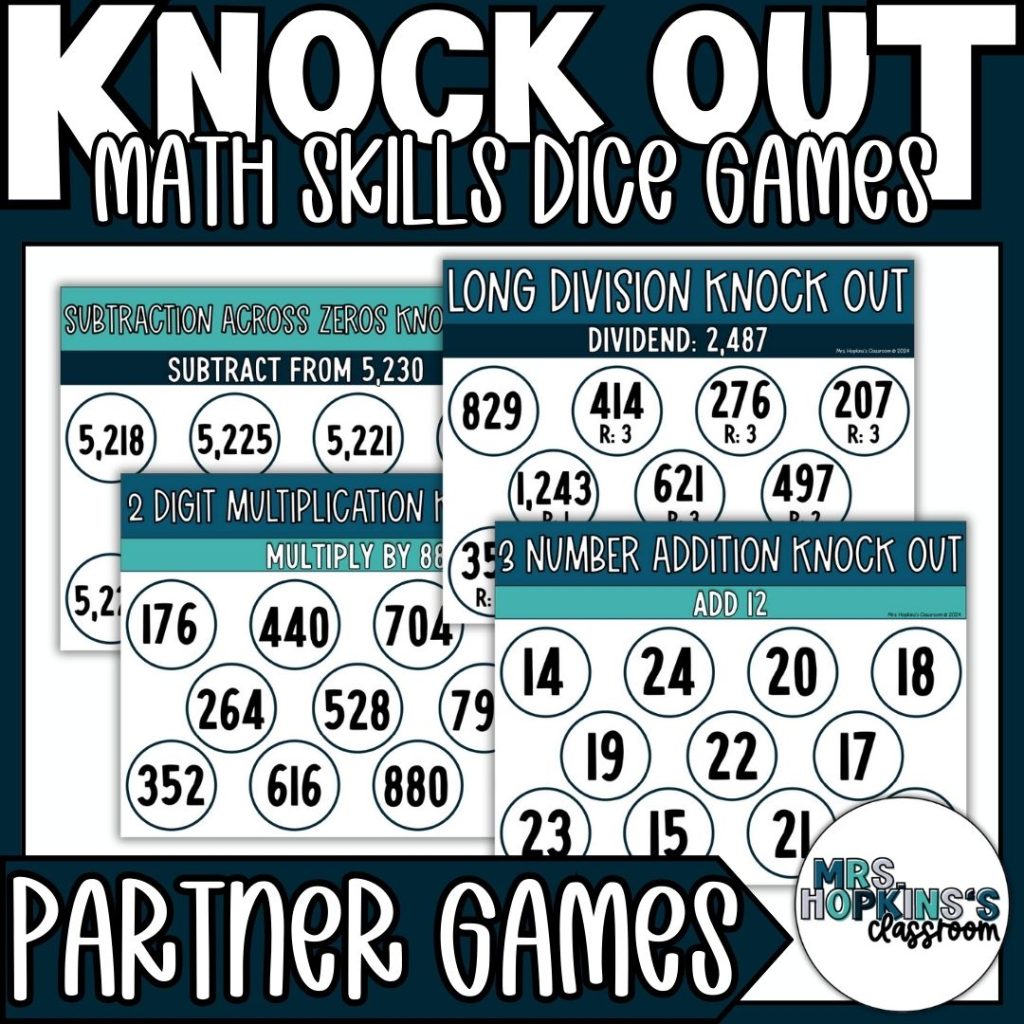
- Targeted and Engaging Review: Focus on key concepts and skills aligned with state standards to ensure students are proficient in tested areas. Practice various skills in stations, give students a task list of stations to visit, and give some free choice in there as well.
I have mazes and Knock Out Math Skills games in my store that work perfect for this! Click the cover to see what skills are available in my store. Or, If you want to snag a free version of these you can find those here: Free Resources
- Practice Tests: Incorporate regular practice tests to familiarize students with the test format, timing, and use test blueprints and sample questions to create the questions they’ll encounter on the test. Start small, just a couple questions, and start to add more to build stamina. Free Multiplication Assessments
- Scaffold Test Taking Skills: Have a teacher table time where you teach test taking skills. Things like eliminating obvious wrong answers, using scratch paper properly, and an effective brain dump!
(Here is the brain dump example I gave my 5th graders, and we practiced every morning starting in February-I would set the timer for 5 minutes and have them brain dump all math concepts that would be helpful-they only had to write what they needed help remembering)
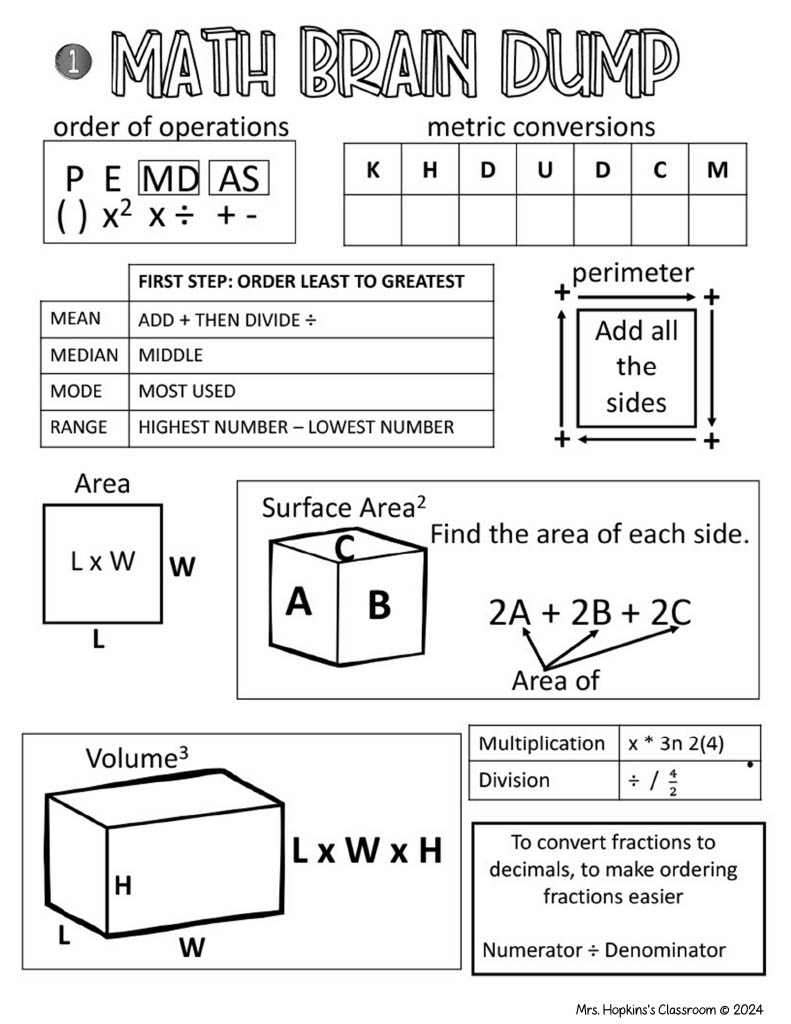
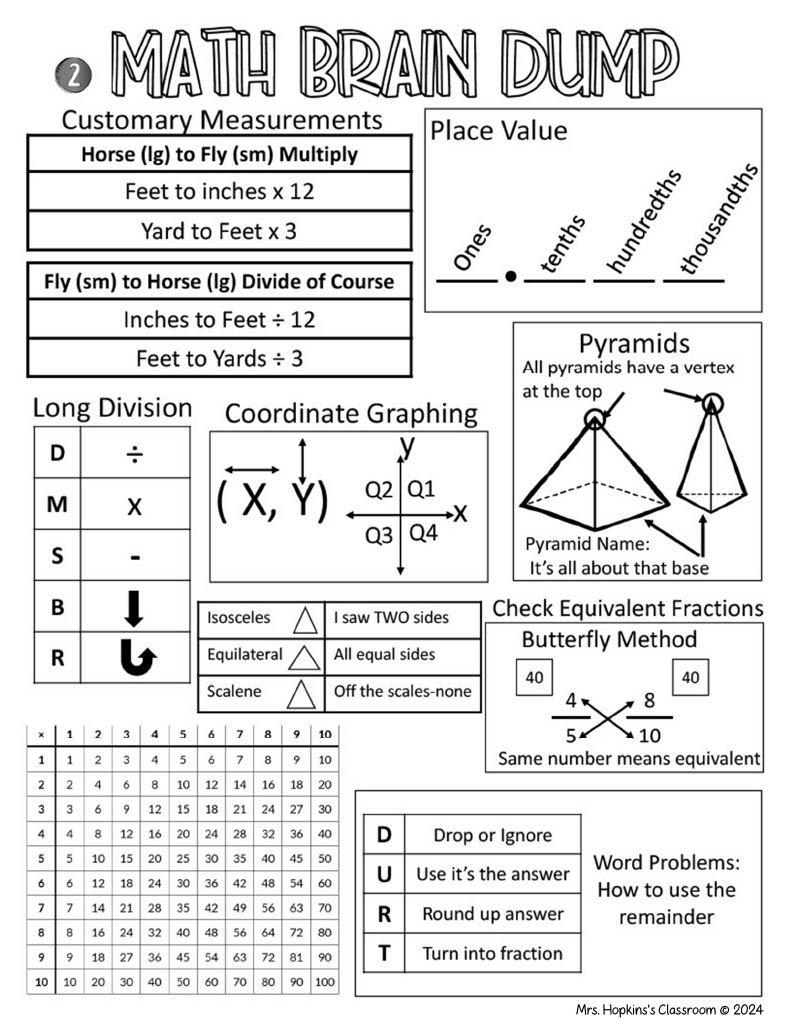
You can snag this here if it would be helpful to your classroom!
- Gamify what you can: Another strategy I used to encourage the use of scratch paper in math, was to have the scratch paper lottery! I saw it in passing on Pinterest (I think!), and took the idea and incorporated it to my classroom. I wish I knew who had posted it. Students had to turn in their scratch paper after a test, I let them wad it up after they showed it to me and threw3-5 Math Intervention Teacher | Creator of Math Resources, Lessons, and GamesHome it in the basket. At the end of the week, I’d grab a few out for a winner, then I’d dump it out for a clean slate! (I had things I looked for to count it, which is why they had to show me first.)
Maximizing Classroom Time
- Incorporating Test Prep into Daily Instruction: Integrate test prep activities seamlessly into your daily instruction, ensuring that you’re addressing both curriculum goals and test preparation.
- Efficient Time Management: Use classroom time efficiently by prioritizing high-impact activities and strategies that directly contribute to student success on the test.
- Work on building stamina: Have a stamina chart, and reward your students for beating their PR (personal record). This is probably one of the hardest things about testing for younger students. They’re not used to sitting still, quietly, and in rows! Why would they be, that’s not always best practice! But test day makes it a requirement.
Cultivating a Positive Mindset
- Fostering Positivity: Emphasize the importance of a positive attitude towards testing, encouraging students to approach the test with confidence and determination.
- Building Confidence and Resilience: Provide strategies for building students’ confidence and resilience, emphasizing their strengths and growth potential.
- Make it memorable: Have a “play off dinner” where the week before State Testing begins, you throw them a special day. Prepare them like they are star athletes about to play the game they’ve been preparing for! Make it a day of building confidence and excitement for conquering the test, in the last week there is not much they’re going to learn that they haven’t already learned…take this time to just build that anticipation in a positive way!
Partnering with Parents
- Involving Parents: Engage parents in the test preparation process by providing them with resources and tools to support their child’s learning at home. One year my daughter’s 4th grade teacher sent home several note pages where we could write our students notes or have family members write them a note. (If a student had uninvolved parents…one of their past teachers stepped in for them-or the principal) Then her teacher would put a new note on her desk before testing started for the day.
- Collaboration: Stress the importance of collaboration between teachers, students, and parents in ensuring student success and a positive attitude about the state testing.
So what is the take away here: starting your test prep early is essential for ensuring your students are well-prepared and confident on test day. By implementing these quick and effective strategies, you can streamline your test prep process and set your students up for success.
Remember, you’re not alone in this journey – there are resources and support available to help you every step of the way.
What is one way you optimize your Test Prep time?


